Which AC Copper Pipe is Best? A Comprehensive Guide!
 Feb 26, 2026|
 View:76
Selecting the right AC copper pipe can significantly impact your air conditioning system's efficiency, longevity, and operating costs. With various types, sizes, and grades of AC copper pipe available in the market, making an informed decision requires understanding the technical specifications, performance characteristics, and practical applications of different copper tubing options.
This comprehensive guide examines the critical factors that determine which copper pipe best suits your specific HVAC needs, helping both professionals and homeowners make confident purchasing decisions based on industry standards and real-world performance data.
Key Takeaways
ASTM B280 certified copper pipes meet industry standards for air conditioning and refrigeration applications
Copper offers thermal conductivity of 385-401 W/m·K, significantly outperforming aluminum alternatives
Proper sizing based on system capacity prevents efficiency loss and premature equipment failure
Type L copper pipes balance durability and cost-effectiveness for most residential applications
Pre-insulated line sets reduce installation time and improve energy efficiency
Quality copper pipes can last 15-20 years with proper maintenance and installation
Understanding AC Copper Pipe Standards and Certifications
The foundation of selecting quality AC copper pipe begins with understanding industry certifications. The ASTM B280 standard establishes requirements for seamless copper tubes used in air conditioning and refrigeration field service. This specification ensures pipes meet strict criteria for chemical composition, mechanical properties, and dimensional tolerances.
ASTM B280 certified pipes are manufactured from UNS C10200, C12000, or C12200 copper alloys, containing a minimum of 99.9 percent copper by weight. The phosphorus content ranges between 0.015 and 0.040 percent, which provides deoxidization benefits while maintaining excellent thermal conductivity. These tubes undergo cold drawing to achieve precise dimensions and wall thickness, followed by bright annealing and dehydration to prevent internal contamination. The standard specifications define exact requirements for dimensions and working pressures.
Key Certification Requirements
Quality AC copper pipe must demonstrate specific performance characteristics. The material must withstand working pressures ranging from 300 psi to 700 psi depending on the application and size, with yield strength of 5100 psi for annealed tubes and 10000 psi for drawn tubes. Temperature ratings typically allow continuous operation up to 150°F, though specialized applications may require higher tolerances.
| Specification | ASTM B280 Requirement | Performance Impact |
|---|---|---|
| Copper Purity | Minimum 99.9% | Superior thermal conductivity and corrosion resistance |
| Phosphorus Content | 0.015-0.040% | Prevents oxidation during manufacturing |
| Wall Thickness | Varies by size (0.030-0.065 inch) | Determines pressure rating and durability |
| Cleanliness | Dehydrated and sealed | Prevents refrigerant contamination |
| Temper Options | Annealed or Drawn | Affects flexibility and mechanical strength |
Types of Copper Pipes for Air Conditioning Systems
Different copper pipe types serve distinct purposes in HVAC installations. Understanding these variations helps identify the most appropriate option for specific system requirements and environmental conditions.
Type K Copper Pipe
Type K features the thickest wall section among pressure-rated copper tubing. This heavy-duty construction makes it suitable for underground installations and applications requiring maximum durability. While less common in standard residential air conditioning, Type K excels in commercial settings or installations exposed to physical stress. The green-colored markings distinguish Type K from other varieties.
Type L Copper Pipe
Type L represents the most balanced AC copper pipe option for residential and light commercial air conditioning applications. With moderate wall thickness, it provides adequate strength for most installations while remaining cost-effective. The blue markings identify Type L tubing. This type handles typical refrigerant pressures effectively and resists corrosion in standard environmental conditions, making it the preferred choice for most AC installations.
ACR (Air Conditioning and Refrigeration) Tube
ACR copper tube receives special treatment during manufacturing. After production, these tubes undergo cleaning, dehydration, and sealing to ensure internal surfaces remain free from contaminants that could damage refrigerant systems. ACR tubing is sized by outside diameter, unlike plumbing pipes which use nominal sizing. This specialized preparation justifies the premium price for air conditioning applications.
Soft vs. Hard Copper
Soft copper undergoes annealing to increase flexibility, allowing easy bending around obstacles during installation. This characteristic makes soft copper ideal for line sets where routing requires multiple direction changes. Hard or rigid copper maintains straight sections and provides superior structural support for fixed installations. Soft copper remains the dominant choice for refrigerant lines in split-system installations.
Thermal Performance and Material Properties
The exceptional thermal properties of copper make it the preferred material for refrigerant transport. Copper demonstrates thermal conductivity ranging from 385 to 401 W/m·K at room temperature. This high conductivity enables rapid heat transfer, directly improving system efficiency and cooling performance.
Copper's thermal performance substantially exceeds alternative materials. Aluminum exhibits thermal conductivity of approximately 200-205 W/m·K, while stainless steel measures only 15-50 W/m·K depending on the alloy. This means copper transfers heat nearly twice as fast as aluminum and up to 20 times faster than steel, translating to superior energy efficiency in air conditioning applications.
Corrosion Resistance and Durability
Copper naturally develops a protective oxide layer that prevents rust and corrosion. This property ensures AC copper pipe maintains integrity over extended service periods, typically 15-20 years in residential applications and longer in commercial settings with proper maintenance. The corrosion resistance also prevents refrigerant contamination, which could damage compressors and reduce system efficiency.
Unlike aluminum alternatives that may corrode when exposed to moisture or certain refrigerants, copper maintains stable performance across varying environmental conditions. This reliability reduces maintenance requirements and extends equipment lifespan, offsetting the higher initial material cost.
| Material Property | Copper | Aluminum | Advantage |
|---|---|---|---|
| Thermal Conductivity | 385-401 W/m·K | 200-205 W/m·K | Copper 90% better |
| Corrosion Resistance | Excellent - forms protective oxide | Moderate - requires coating | Copper superior |
| Service Life | 15-20+ years | 10-15 years | Copper 25% longer |
| Maximum Operating Temperature | 250°F continuous | 180-200°F continuous | Copper higher range |
| Pressure Rating | Up to 700 psi (working) | 300-500 psi typical | Copper 40% higher |
Selecting the Right Pipe Size for Your System
Proper sizing of AC copper pipe directly affects system performance, energy efficiency, and equipment longevity. Undersized pipes restrict refrigerant flow, forcing compressors to work harder and increasing energy consumption. Oversized pipes slow refrigerant velocity, reducing heat transfer efficiency and potentially causing oil return problems.
Standard residential air conditioning systems typically use pipe sizes ranging from 1/4 inch to 7/8 inch outside diameter. The specific size depends on system capacity measured in BTUs or tons of cooling. Manufacturers provide detailed specifications matching pipe dimensions to equipment models, and following these guidelines ensures optimal performance.
Common Size Applications
| System Capacity | Liquid Line Size | Suction Line Size | Typical Application |
|---|---|---|---|
| 1-1.5 Ton (12,000-18,000 BTU) | 1/4 inch | 3/8 inch | Small rooms, mini-splits |
| 2-2.5 Ton (24,000-30,000 BTU) | 3/8 inch | 1/2 or 5/8 inch | Average residential |
| 3-4 Ton (36,000-48,000 BTU) | 3/8 or 1/2 inch | 3/4 inch | Large homes |
| 5+ Ton (60,000+ BTU) | 1/2 inch or larger | 7/8 inch or larger | Commercial applications |
Length Considerations
Line set length impacts refrigerant pressure and system efficiency. Most manufacturers specify maximum allowable lengths for their equipment, typically ranging from 50 to 100 feet for residential systems. Longer runs may require larger pipe diameters to maintain proper refrigerant velocity and pressure. Installations exceeding manufacturer specifications may need additional refrigerant charge and could void warranties.
When planning installations, minimize pipe length where possible. Each additional foot of line set increases refrigerant charge requirements and potential efficiency loss. Straight runs perform better than routes with multiple bends, as each 90-degree elbow introduces flow resistance equivalent to several feet of straight pipe.
Pre-Insulated vs. Bare Copper Line Sets
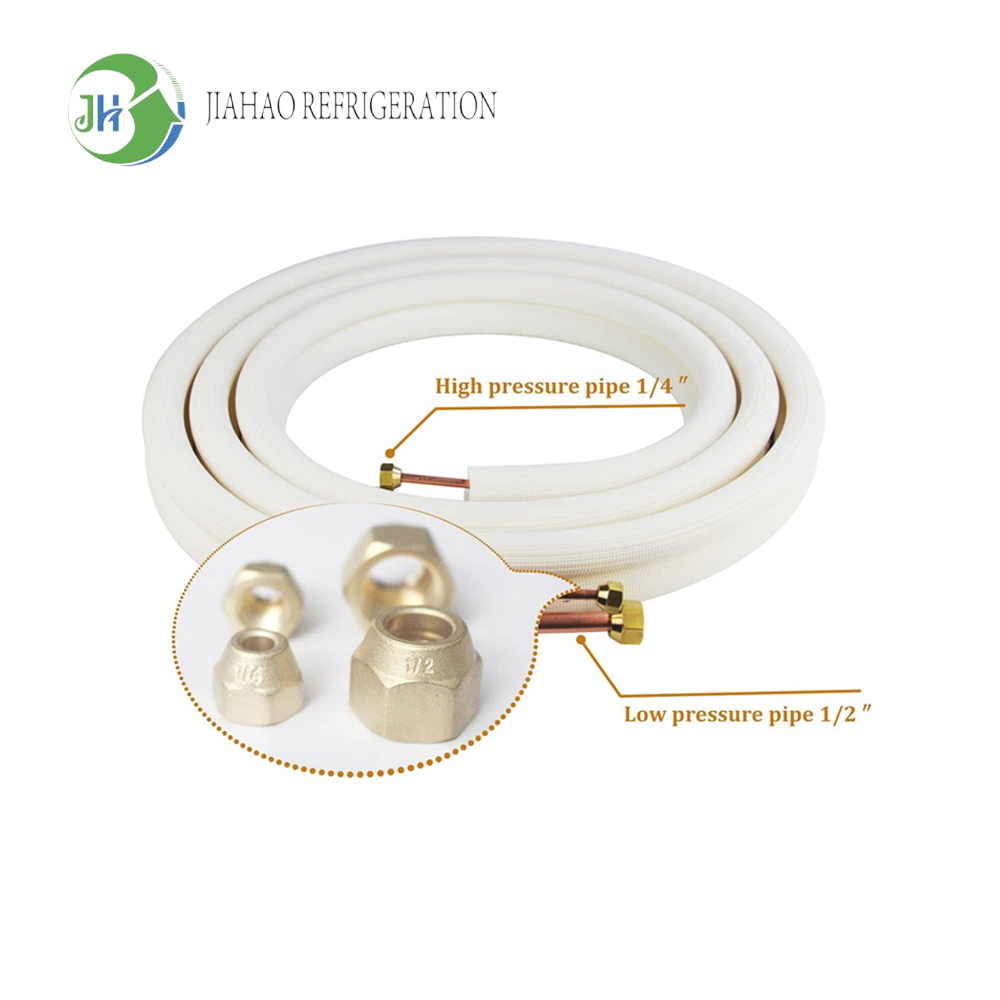
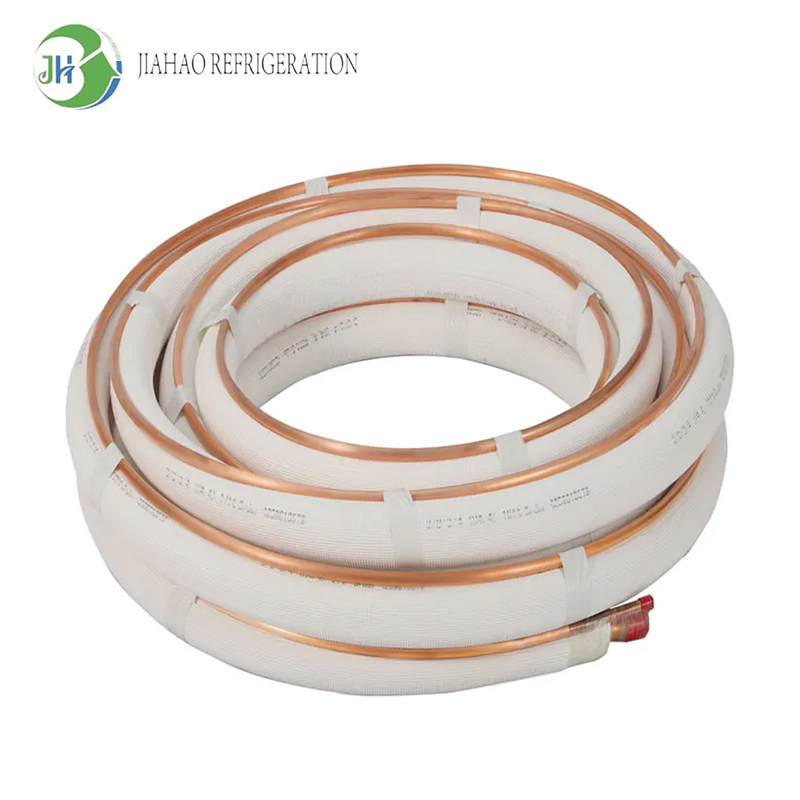
Pre-insulated line sets arrive with foam insulation factory-installed on the copper tubing. This configuration offers significant installation advantages and performance benefits over bare copper that requires field-applied insulation.
Benefits of Pre-Insulated Line Sets
Factory-applied insulation ensures consistent thickness and complete coverage, eliminating gaps that cause energy loss and condensation problems. The insulation prevents heat gain on the cold suction line and heat loss on the hot liquid line, maintaining refrigerant temperatures and improving efficiency. Pre-insulated sets reduce installation time by eliminating the need to measure, cut, and apply separate insulation.
Quality pre-insulated line sets use closed-cell foam with low thermal conductivity, typically 0.034 W/m·K or lower. This material resists moisture absorption, preventing insulation degradation over time. UV-resistant outer jackets protect the insulation from sun damage in exposed installations.
When to Choose Bare Copper
Bare AC copper pipe remains appropriate for custom installations requiring specific routing or when matching existing line sets. Professional installers may prefer bare copper for complex installations where pre-formed bends and custom fitting placement offer advantages. Bare copper also costs less initially, though field-applied insulation and increased labor offset some savings.
Installation Best Practices
Proper installation techniques maximize AC copper pipe performance and longevity. Following industry standards prevents common problems like refrigerant leaks, reduced efficiency, and premature system failure.
Bending and Routing
When bending soft copper pipe, maintain a minimum bending radius of at least 5 times the pipe diameter. Tighter bends risk kinking, which restricts refrigerant flow and weakens the pipe wall. Use proper bending tools or springs to support the pipe during forming. Avoid multiple bends in close proximity, as this creates excessive resistance.
Route pipes with gradual elevation changes to facilitate oil return to the compressor. Refrigerant oil travels with the refrigerant, and proper pipe slope ensures oil doesn't accumulate in line sets. Support pipes every 4-6 feet to prevent sagging, using hangers designed for copper tubing that won't damage the pipe wall or insulation.
Connection Methods
Flare fittings represent the standard connection method for AC copper pipe. The flaring process expands the pipe end to create a bell shape that seats against a male fitting. Proper flaring requires clean pipe ends cut square and deburred to prevent leaks. Overtightening flare nuts can damage the flare and cause leaks, while undertightening allows refrigerant escape.
Brazed connections offer superior strength and reliability but require more skill and equipment. Brazing creates a permanent joint by melting filler metal into the connection at temperatures above 800°F. This method prevents leaks more effectively than mechanical connections and handles higher pressures. Always purge lines with nitrogen during brazing to prevent oxide formation inside the pipe.
Pressure Testing and Evacuation
After installation, pressure test the complete system to verify leak-free connections. Use dry nitrogen at 300-500 psi for 24 hours, monitoring for pressure drops that indicate leaks. Never pressure test with refrigerant or oxygen, as these create safety hazards.
Following successful pressure testing, evacuate the system using a vacuum pump to remove air and moisture. Achieve and hold a vacuum of 500 microns or lower for at least one hour. Moisture in the system causes ice formation, acid buildup, and compressor damage. A proper evacuation ensures long-term reliability.
Cost Considerations and Value Analysis for AC Copper Pipe
AC copper pipe pricing varies based on type, size, and preparation. Understanding cost factors helps balance initial investment against long-term performance and durability.
Material Costs
Copper trades as a commodity, causing prices to fluctuate based on market conditions. As of early 2025, copper costs approximately 3-4 times more per ton than aluminum. However, copper's superior performance often justifies the premium. Type L copper typically costs less than Type K due to thinner walls, while ACR tube commands higher prices due to special cleaning and sealing processes.
Pre-insulated line sets cost 30-50 percent more than bare copper but reduce installation labor significantly. The complete package eliminates separate purchases of insulation materials and reduces installation time by 40-60 percent according to installer surveys.
Long-Term Value
Quality AC copper pipe delivers substantial long-term value despite higher upfront costs. The 15-20 year service life means one copper installation outlasts two or three aluminum replacements. Superior thermal conductivity improves system efficiency, reducing energy costs throughout the equipment's lifetime. Industry studies suggest copper systems consume 10-15 percent less energy than aluminum equivalents.
Reduced maintenance requirements further enhance copper's value proposition. The corrosion resistance and structural integrity mean fewer service calls and repairs. When calculating total cost of ownership, copper often proves more economical over a 10-15 year period.
Maintenance and Troubleshooting for AC Copper Pipe
Regular inspection and maintenance preserve AC copper pipe performance and prevent costly failures. While AC copper pipe requires less attention than alternative materials, periodic checks identify potential problems before they cause system damage.
Inspection Points
Examine all accessible connections twice annually for signs of refrigerant leaks. Oil residue around fittings indicates escaping refrigerant carrying compressor oil. Check insulation for damage, particularly in exposed areas subject to sun, weather, or physical contact. Degraded insulation loses effectiveness and allows condensation formation.
Look for signs of physical damage such as dents, kinks, or compression. While minor surface scratches don't affect performance, deep gouges or flattened sections compromise pipe integrity. Verify pipe supports remain secure and properly positioned, as loose hangers allow vibration and stress on connections.
Common Issues and Solutions
Refrigerant leaks represent the most common AC copper pipe problem. Small leaks at flare fittings often respond to retightening connections. Larger leaks or leaks at brazed joints require professional repair involving system evacuation, connection repair or replacement, and refrigerant recharge.
Condensation on the suction line indicates inadequate insulation. While some sweating is normal in humid conditions, excessive moisture dripping suggests insulation gaps or damage. Replace damaged insulation promptly to prevent energy waste and potential water damage to surrounding structures.
Choosing a Reliable Supplier
Selecting quality AC copper pipe starts with partnering with reputable manufacturers and suppliers. The market includes numerous options, but not all provide consistent quality and reliable service.
When evaluating suppliers, verify they provide ASTM B280 certified products with proper documentation. Request material certifications confirming copper purity, phosphorus content, and mechanical properties meet specifications. Quality manufacturers maintain rigorous testing protocols ensuring every production batch meets standards.
Look for suppliers offering comprehensive product lines including multiple sizes, types, and configurations. This selection flexibility allows matching specific project requirements without compromising on critical specifications. Pre-insulated line sets should feature quality foam insulation with appropriate R-values and UV-resistant outer jackets.
For businesses seeking dependable HVAC components, JIAHAO manufactures professional-grade copper line sets meeting international standards. With over 120 employees, 25,000 square meters of production facilities, and more than 10 automated production lines, JIAHAO delivers consistent quality backed by ISO 9001, ISO 14001, and ISO 45001 certifications. Their copper pipe products serve markets across Europe, America, the Middle East, Africa, and Southeast Asia, supporting both residential and commercial air conditioning applications.
Summary
Selecting the best AC copper pipe requires balancing multiple factors including certification standards, material properties, sizing requirements, and installation methods. ASTM B280 certified AC copper pipe provides the foundation for reliable air conditioning systems, offering superior thermal conductivity and corrosion resistance compared to alternative materials.
Type L AC copper pipe represents the optimal choice for most residential applications, delivering adequate strength and durability at reasonable cost. Pre-insulated line sets simplify installation while improving energy efficiency through consistent insulation coverage. Proper sizing based on system capacity prevents performance problems and equipment damage.
While AC copper pipe costs more initially than alternatives, the superior performance, extended service life, and reduced maintenance requirements deliver better long-term value. Quality installation following industry best practices maximizes these benefits, ensuring efficient system operation for 15-20 years or longer.
Frequently Asked Questions
What is the difference between Type L and Type K copper pipe?
Type K features thicker walls for heavy-duty applications and underground installations, while Type L has moderate wall thickness suitable for most residential AC systems. Type L balances durability and cost-effectiveness for standard installations.
Can I use plumbing copper pipe for air conditioning?
While plumbing copper has similar composition, ACR-grade copper receives special cleaning and sealing to prevent refrigerant system contamination. Using plumbing copper risks introducing contaminants that damage compressors. Always specify ASTM B280 ACR copper for air conditioning.
How do I determine the correct pipe size for my AC system?
Check the manufacturer's specifications for your specific equipment model. Pipe size depends on system capacity measured in BTUs or tons. Generally, residential systems from 1-1.5 tons use 1/4 inch liquid and 3/8 inch suction lines, while 2-2.5 ton systems require 3/8 inch liquid and 1/2-5/8 inch suction lines.
Is pre-insulated line set worth the extra cost?
Pre-insulated line sets cost 30-50 percent more but reduce installation time by 40-60 percent and ensure consistent insulation quality. For most installations, the labor savings and improved performance justify the higher material cost.
How long does AC copper pipe typically last?
Quality copper pipe lasts 15-20 years in residential applications with proper installation and maintenance. Commercial installations often exceed 20 years. Copper's corrosion resistance and durability surpass aluminum alternatives by 25-30 percent.
What causes condensation on AC copper pipes?
Condensation forms when cold suction line temperatures meet humid air. Adequate insulation prevents this issue. Excessive condensation indicates damaged or insufficient insulation that should be replaced to maintain efficiency and prevent water damage.
Can copper pipe be reused when replacing an AC unit?
Existing copper pipes can be reused if they match the new system's specifications and show no damage or contamination. Professional inspection and thorough cleaning are essential. Many installers recommend new line sets to ensure optimal performance and avoid potential problems.
Why is copper better than aluminum for AC applications?
Copper offers thermal conductivity of 385-401 W/m·K compared to aluminum's 200-205 W/m·K, providing nearly double the heat transfer efficiency. Copper also demonstrates superior corrosion resistance, longer service life, and better pressure handling capabilities.