


How PP HVAC Pads Withstand Extreme Weather Conditions
 Mar 11, 2026|
 View:489
When homeowners and HVAC professionals face the challenge of protecting expensive outdoor air conditioning units from the elements, the choice of condenser pad material becomes critical. While concrete pads have dominated the market for decades, polypropylene (PP) HVAC condenser pads are revolutionizing outdoor equipment protection with their remarkable ability to resist extreme weather conditions that would damage traditional materials.
Key Takeaways
Superior UV Resistance: PP material maintains structural integrity under prolonged sunlight exposure through advanced stabilization technology
Temperature Resilience: Functional performance range from -40°F to 230°F protects equipment in all climates
Moisture Impermeability: Non-porous structure prevents water absorption, eliminating freeze-thaw damage
Chemical Durability: Resists degradation from refrigerants, coil cleaners, and environmental contaminants
Long-Term Value: 20+ year lifespan with minimal maintenance requirements
Understanding Polypropylene Material Science
Polypropylene represents a significant advancement in polymer technology for outdoor applications. As a thermoplastic polymer, PP possesses inherent characteristics that make it exceptionally suitable for HVAC condenser pad applications. The material's molecular structure consists of repeating propylene monomers arranged in long chains, creating a crystalline structure that provides both flexibility and strength.
According to ASTM D4101 standards for polypropylene materials, PP compounds used in injection molding and extrusion must meet specific performance criteria. These industry standards ensure that manufacturers produce materials capable of withstanding environmental stressors while maintaining dimensional stability and mechanical properties.
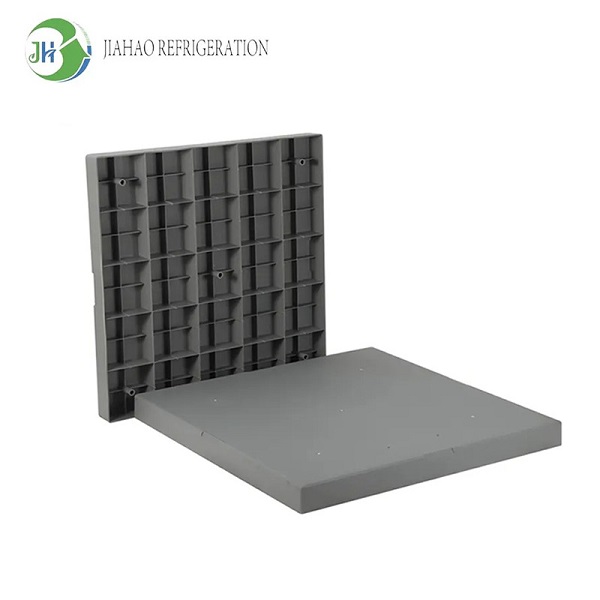
Core Physical Properties of PP Condenser Pads
| Property | Specification | Performance Benefit |
|---|---|---|
| Density | 0.89-0.91 g/cm³ | Lightweight for easy installation |
| Melting Point | 164-174°C (327-345°F) | High temperature stability |
| Operational Range | -40°C to 110°C (-40°F to 230°F) | All-climate functionality |
| Water Absorption | <0.01% | Moisture resistance |
| Tensile Strength | 30-40 MPa | Load-bearing capacity |
UV Radiation Resistance: The Primary Weather Challenge
Ultraviolet radiation represents the most significant threat to outdoor plastic materials. Research published in Photochemical & Photobiological Sciences demonstrates that UV-B wavelengths (290-315 nm) are particularly effective at initiating photo-oxidation in plastics. However, properly stabilized PP materials for HVAC condenser pads incorporate advanced UV absorbers and hindered amine light stabilizers (HALS) that intercept harmful radiation before it can damage the polymer matrix.
How UV Stabilization Works
The protection mechanism involves multiple layers of defense. UV absorbers function like sunscreen for plastic, converting harmful UV energy into harmless heat. These compounds preferentially absorb UV radiation at wavelengths that would otherwise break polymer bonds. HALS work differently—they scavenge free radicals formed during the oxidation process, preventing chain reactions that lead to material degradation.
Field studies indicate that stabilized PP condenser pads maintain over 90% of their original tensile strength after 10 years of outdoor exposure in high-UV environments. This performance far exceeds many alternative materials, making PP an ideal choice for regions with intense solar radiation.
Freeze-Thaw Cycle Resilience
In climates experiencing seasonal temperature fluctuations, the freeze-thaw cycle destroys many traditional HVAC condenser pad materials. Concrete pads absorb moisture, which expands when freezing, causing cracking and deterioration. PP's virtually zero water absorption rate eliminates this failure mechanism entirely.
The material's molecular structure maintains flexibility even at sub-zero temperatures. Unlike brittle materials that fracture under thermal stress, PP can accommodate the dimensional changes that occur during temperature cycling without developing structural weaknesses. This characteristic proves particularly valuable in northern climates where HVAC equipment experiences hundreds of freeze-thaw cycles annually.
Technical Insight: PP's impact resistance actually increases at lower temperatures due to its semicrystalline structure, which maintains toughness down to -40°F—a critical advantage over materials that become brittle in cold conditions.
Chemical Resistance in HVAC Environments
Air conditioning systems involve exposure to various chemicals that can degrade inferior pad materials. Refrigerants, compressor oils, coil cleaning agents, and environmental pollutants all contact condenser pads during normal operation and maintenance. Polypropylene demonstrates exceptional inertness to these substances.
Compatibility with Common HVAC Chemicals
| Chemical Type | Common Examples | PP Resistance |
|---|---|---|
| Refrigerants | R-410A, R-32, R-134a | Excellent |
| Oils & Lubricants | Mineral oils, POE oils | Excellent |
| Cleaners | Coil cleaners, degreasers | Very Good |
| Environmental | Acids, alkalies, salts | Excellent |
Testing protocols outlined in ASTM D543 for evaluating plastic resistance to chemical reagents confirm PP's exceptional durability. The material shows minimal dimensional change, weight loss, or property degradation even after prolonged exposure to aggressive chemicals at elevated temperatures.
Temperature Extremes and Thermal Stability
Geographic diversity means HVAC condenser pads must function reliably in environments ranging from desert heat to arctic cold. PP materials excel across this entire spectrum. During summer months, when surface temperatures on dark rooftops or concrete pads can exceed 160°F, PP maintains structural integrity without softening or deforming.
The material's heat deflection temperature—the point at which it begins to soften under load—typically ranges from 212°F to 230°F for HVAC-grade formulations. This provides substantial safety margin even in the hottest climates. Conversely, PP's low-temperature impact resistance ensures the pad won't crack or shatter during winter installation or when subjected to impact from ice or frozen debris.
Load-Bearing Performance and Dimensional Stability
Modern residential and commercial HVAC condensers can weigh several hundred pounds, requiring pads that maintain level support without sagging or deforming. PP condenser pads achieve this through optimized structural design that distributes loads efficiently. The ribbed underside pattern commonly seen in quality PP pads isn't merely aesthetic—it creates a structural framework that enhances compressive strength while minimizing material usage.
Dimensional stability proves equally important. Materials that warp or distort over time can cause equipment misalignment, leading to vibration issues and premature component failure. PP's low coefficient of thermal expansion means the pad maintains its geometry despite temperature fluctuations, ensuring equipment remains properly positioned year after year.
Ready to Upgrade Your HVAC Installation?
Professional contractors and homeowners seeking reliable, long-lasting condenser pad solutions trust JIAHAO for premium PP products. With multiple size options and proven performance in extreme conditions, JIAHAO HVAC condenser pads deliver the durability professionals demand.
Get technical specifications, bulk pricing, and expert guidance on selecting the perfect pad for your application. Experience the difference that quality materials make.
✓ Free Technical Consultation | ✓ Custom Size Options | ✓ Fast Delivery
Environmental Factors Beyond Weather
While traditional weather elements pose significant challenges, PP condenser pads must also resist biological and environmental factors. Soil contact exposes pads to microorganisms, fungi, and insects that can degrade organic materials. PP's synthetic nature makes it inherently resistant to biological attack—it won't rot, support mold growth, or attract termites like wood-based alternatives.
Ground moisture and soil salts that would corrode metal or deteriorate concrete have no effect on PP. The material's hydrophobic surface prevents water wicking, while its chemical resistance protects against soil contaminants. This makes PP particularly advantageous in coastal regions where salt exposure accelerates degradation of conventional materials.
Long-Term Performance and Lifecycle Value
Initial cost considerations often dominate purchasing decisions, but lifecycle analysis reveals PP condenser pads' true value proposition. While concrete pads may offer lower upfront costs, they require periodic replacement due to cracking, settling, and deterioration. PP pads typically provide 20+ years of maintenance-free service, eliminating replacement costs and associated labor.
| Comparison Factor | Concrete Pads | PP Pads |
|---|---|---|
| Typical Lifespan | 8-12 years | 20+ years |
| Freeze-Thaw Damage | Common | None |
| UV Degradation | Surface deterioration | Stabilized resistance |
| Installation Weight | 80-150 lbs | 3-8 lbs |
| Maintenance Required | Regular monitoring | Minimal |
The lightweight nature of PP pads also reduces installation labor costs and eliminates the need for heavy equipment during placement. Single-person installation is possible for most residential units, contrasting sharply with concrete pads requiring multiple workers or mechanical assistance.
Summary: Material Science Meets Real-World Performance
The exceptional weather resistance of PP HVAC condenser pads stems from fundamental material properties enhanced through modern polymer engineering. UV stabilization technology protects against radiation damage, while the material's inherent characteristics—moisture resistance, chemical inertness, temperature stability, and structural integrity—combine to deliver superior long-term performance.
Field experience across diverse climatic zones confirms laboratory predictions: properly manufactured PP condenser pads maintain their protective function decade after decade. This reliability translates into reduced maintenance costs, elimination of premature replacements, and peace of mind for property owners and facility managers.
As HVAC systems become more sophisticated and expensive, the foundation supporting them deserves equal attention to quality and durability. Polypropylene technology delivers that foundation, backed by materials science and proven in the harshest environments nature can provide.
Frequently Asked Questions
How long do PP HVAC condenser pads last in extreme climates?
Quality PP pads typically last 20+ years in extreme climates with proper UV stabilization. The material resists both desert heat and arctic cold without degradation, significantly outlasting concrete alternatives that crack from freeze-thaw cycling.
Will UV radiation cause PP pads to become brittle over time?
Stabilized PP formulations maintain flexibility and strength despite UV exposure. UV absorbers and HALS prevent photo-oxidation that causes brittleness, allowing pads to retain over 90% of original mechanical properties after a decade of outdoor use.
Can PP pads handle the weight of commercial HVAC units?
Yes, properly designed PP pads support loads exceeding 1,400 pounds through optimized structural ribbing. The material's compressive strength and dimensional stability ensure equipment remains level without sagging or deformation.
Do PP condenser pads resist mold and mildew growth?
PP's synthetic composition makes it inherently resistant to biological growth. Unlike organic materials, it won't support mold, mildew, or fungal growth even in humid environments or when in constant ground contact.
Are PP pads environmentally friendly compared to concrete?
PP pads offer environmental advantages through their long lifespan reducing replacement frequency, lighter weight decreasing transportation emissions, and recyclability at end-of-life. The material requires less energy to manufacture than concrete production.
What maintenance do PP HVAC pads require?
PP pads require virtually no maintenance. Occasional cleaning with water removes dirt and debris, but the material resists weathering, chemical exposure, and biological attack without need for sealing, painting, or replacement.


