How Does a Refrigerant Distributor Work in an AC System?
 May 28, 2026|
 View:87
Most people know an air conditioner has a compressor, a fan, and some kind of refrigerant. But there is one small component tucked inside the system that quietly determines whether the AC runs efficiently or wastes energy every single day — and almost nobody talks about it.
That component is the refrigerant distributor.
When a liquid refrigerant distributor fails or is sized incorrectly, the entire cooling cycle goes out of balance. Some parts of the evaporator coil freeze up. Other parts barely work. The compressor struggles. Energy bills climb. And the root cause is a fitting that often costs less than a cup of coffee.
This guide explains, in plain language, exactly how an AC refrigerant distributor works, why it matters, what happens when it goes wrong, and what to look for when sourcing one. Whether someone is an HVAC professional, a building manager, or simply curious about how their AC system actually functions — this guide covers it all.
A refrigerant distributor splits refrigerant into equal streams and feeds them evenly across the evaporator coil.
It is installed between the expansion valve and the evaporator, and is critical for maintaining balanced, efficient cooling.
Without proper refrigerant distribution, AC systems lose efficiency, ice up, or cause compressor damage.
Distributors are most commonly made from copper or brass and come in orifice and venturi styles.
Material quality, sizing, and lead tube length all directly affect how well the distributor performs.
1. What Is a Refrigerant Distributor?
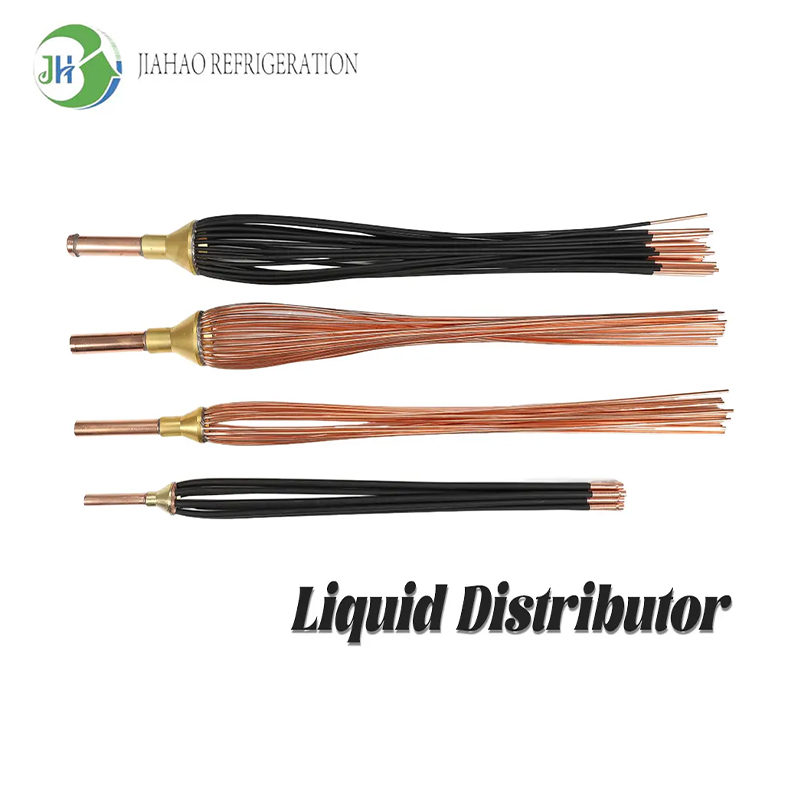
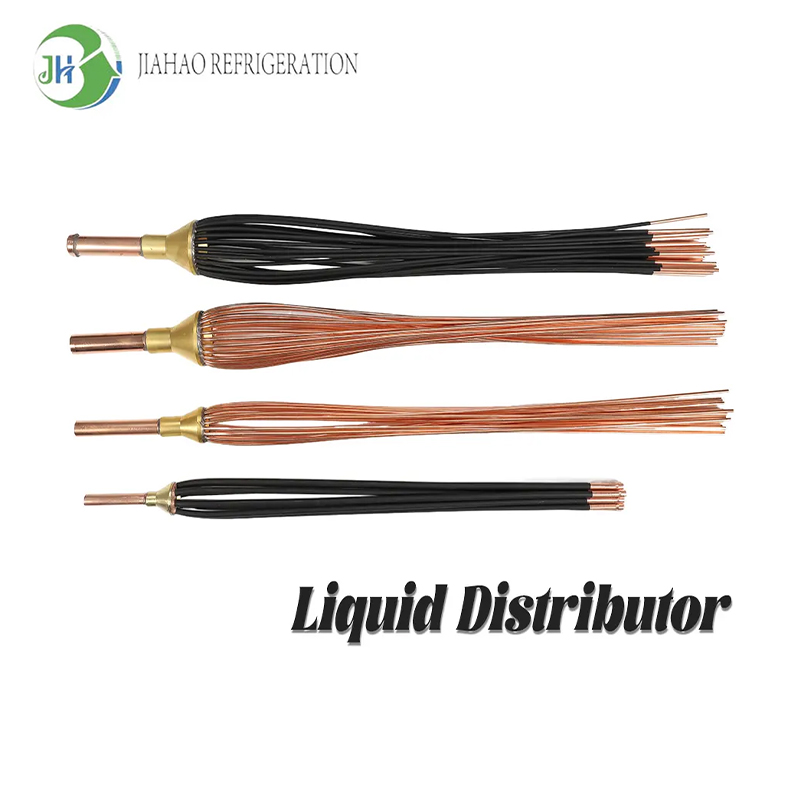
A refrigerant distributor is a small fitting — usually shaped like a short cylinder or a branched hub — that connects to the outlet of the expansion valve and feeds multiple tubes called "leads" or "circuit tubes," each of which runs into a separate circuit inside the evaporator coil.
Think of it like a garden hose splitter. One hose comes in, and the splitter divides that single stream into two, four, six, or even more equal flows. In an AC system, the "hose" is the refrigerant line, and the splitter is the liquid refrigerant distributor.
The distributor's primary job sounds simple: make sure every circuit in the evaporator coil gets the same amount of refrigerant. In practice, achieving perfectly equal flow across multiple circuits — especially when the refrigerant is partially liquid and partially gas at this stage — requires careful engineering of the distributor's internal geometry, orifice sizing, and tube configuration.
To understand why this matters so much, it helps to understand where the refrigerant distributor fits in the broader AC cycle.
2. Where Does a Refrigerant Distributor Fit in the AC Cycle?
An air conditioning system works by moving refrigerant through a closed loop — absorbing heat indoors and releasing it outdoors, over and over again. According to the U.S. Department of Energy, air conditioners transfer heat from a building's interior to the outside environment using this continuous refrigerant cycle.
The four main stages of that cycle are:
| Stage | Component | What Happens |
|---|---|---|
| 1. Compression | Compressor | Low-pressure gas refrigerant is compressed into high-pressure, high-temperature gas. |
| 2. Condensation | Condenser Coil (outdoor) | Hot gas releases heat to outdoor air and becomes high-pressure liquid. |
| 3. Expansion | Expansion Valve → Refrigerant Distributor | High-pressure liquid passes through the expansion valve, pressure drops sharply. The distributor then splits this low-pressure, two-phase mixture evenly into the evaporator circuits. |
| 4. Evaporation | Evaporator Coil (indoor) | Refrigerant absorbs heat from indoor air and evaporates into a gas, cooling the space. |
The refrigerant distributor sits right at the entry point of stage 4 — after the expansion valve and before the evaporator circuits. This placement is critical because at this moment, the refrigerant is a turbulent, two-phase mixture of liquid droplets and vapor. Distributing that mixture evenly is the only way to make the evaporator coil work as designed.
3. How Does a Refrigerant Distributor Actually Work?
When the expansion valve opens, it releases a measured amount of high-pressure liquid refrigerant. As that refrigerant passes through the valve and its pressure drops suddenly, some of it instantly vaporizes — a process called "flash evaporation." The result is a fast-moving mixture of liquid and gas entering the distributor body.
Inside the AC refrigerant distributor, this mixture hits a small internal orifice or nozzle. That nozzle creates a controlled pressure drop and forces the refrigerant to accelerate, which helps mix the liquid and vapor phases together more uniformly. Once the flow is equalized inside the body, it splits through multiple outlet ports — each connected to a distributor lead tube — and travels into a separate circuit of the evaporator coil.
The key engineering challenge is this: if any one circuit receives more refrigerant than the others, it will absorb heat faster and potentially flood with liquid refrigerant. Circuits receiving too little will superheat quickly and underperform. In both cases, the overall efficiency of the coil drops significantly.
This is why distributor lead length matters: all lead tubes connected to the same distributor should be the same length. Equal tube lengths create equal pressure resistance in each circuit, which is what ensures the flow stays balanced all the way from the distributor to the coil.
The Role of the Internal Nozzle
The nozzle (also called the distributor orifice) sits inside the distributor body and is sized precisely for the system's refrigerant capacity. If the nozzle is too large, refrigerant flows through too easily and doesn't achieve the velocity needed to keep the liquid and vapor phases well mixed. If it's too small, the pressure drop becomes excessive and reduces the coil's performance.
Most distributors are designed so the nozzle can be replaced independently, allowing technicians to adjust the distributor for a different tonnage or refrigerant type without replacing the entire assembly.
4. Types of Refrigerant Distributors
There are two main styles of refrigerant distributor used in modern AC systems:
Orifice-Type Distributor
This is the most common type. It uses a precisely sized hole (orifice) inside the body to control flow and create the mixing action needed for even distribution. Orifice distributors are simple, reliable, and easy to service. They work well across a wide range of AC applications, from residential split systems to large commercial units.
Venturi-Type Distributor
Instead of a sharp-edged orifice, a venturi distributor uses a smooth, tapered internal passage to accelerate and mix the refrigerant. This design tends to produce a slightly more uniform two-phase mixture, which is beneficial in larger systems or multi-zone VRF (Variable Refrigerant Flow) applications where precise balance is especially critical.
| Feature | Orifice-Type | Venturi-Type |
|---|---|---|
| Mixing mechanism | Sharp orifice creates turbulence | Tapered passage accelerates flow |
| Best for | Residential & light commercial | Commercial & VRF systems |
| Serviceability | Nozzle replaceable | Usually a single unit |
| Common materials | Copper, brass | Brass, aluminum |
| Pressure drop | Higher | Lower |
5. Why Copper Is the Preferred Material for Refrigerant Distributors
Most high-quality refrigerant distributors — and the lead tubes connected to them — are made from copper. This is not simply tradition. Copper offers a combination of properties that are uniquely well-suited to refrigerant system components:
Corrosion resistance: Copper does not react with modern refrigerants including R-410A and R-32. It resists internal oxidation even under years of constant refrigerant flow.
Thermal conductivity: Copper conducts heat efficiently, which supports the phase-change processes happening inside the distributor and leads.
Malleability and brazeability: Copper can be precisely formed and easily joined to other components by brazing, creating leak-proof, high-integrity connections that hold up under operating pressures of 200–500 psi.
Longevity: Properly installed copper distributor assemblies can last as long as the AC system itself — typically 15 to 20 years with correct refrigerant charge and maintenance.
The quality of copper fittings and distributor components depends heavily on manufacturing precision. A distributor body that is even slightly out of round, or lead tubes that vary in inner diameter, will introduce flow imbalances that undermine the entire assembly's purpose.
6. Signs That a Refrigerant Distributor May Be Failing
Because the distributor is buried inside the air handler and not visible during normal operation, problems with it are often misdiagnosed as refrigerant charge issues, expansion valve faults, or evaporator coil problems. Here are the most common signs that the liquid refrigerant distributor deserves a closer look:
| Symptom | What It Suggests |
|---|---|
| Ice forming on part of the evaporator coil | Uneven refrigerant distribution — some circuits flooding while others starve |
| AC blows slightly warm air despite correct charge | Reduced effective coil area due to maldistribution |
| High superheat on some circuits, low on others | Classic sign of distributor imbalance (detected with temperature probes) |
| Unusual noise near the evaporator | May indicate turbulent or restricted refrigerant flow through a damaged orifice |
| Higher-than-expected energy consumption | Compressor working harder to compensate for reduced coil efficiency |
It is worth noting that a clogged distributor nozzle — often caused by debris in the refrigerant circuit or compressor oil migration — is a common failure mode. Regular system maintenance, clean refrigerant, and proper oil management all help extend distributor life.
7. Refrigerant Distributor Sizing: Getting It Right
A refrigerant distributor must be matched to three key parameters: refrigerant type, system capacity (tonnage or kW), and number of evaporator circuits. Installing an incorrectly sized distributor — even in an otherwise perfect system — will result in chronic underperformance.
For context, here are general guidance figures commonly used in the HVAC industry:
| System Capacity | Typical Number of Circuits | Distributor Outlets Needed |
|---|---|---|
| 1 – 2 tons (3.5 – 7 kW) | 2 – 4 | 2 – 4 |
| 3 – 5 tons (10 – 17.5 kW) | 4 – 8 | 4 – 8 |
| 10 – 20 tons (35 – 70 kW) | 8 – 16 | 8 – 16 |
| VRF / Multi-zone | Varies by zone count | Custom — per zone or indoor unit |
When selecting a distributor, HVAC engineers also factor in the refrigerant's properties — particularly its liquid-to-vapor density ratio at the operating pressure — since different refrigerants behave differently as they pass through the orifice. Modern systems using R-32 or R-410A require distributors designed and rated for those specific fluids.
8. Refrigerant Distributor vs. Expansion Valve: Understanding the Difference
These two components are often confused because they sit next to each other in the system and both deal with controlling refrigerant flow. However, they perform entirely different functions:
The expansion valve (TXV or EEV) controls how much refrigerant enters the evaporator. It measures superheat (or uses electronic feedback) and adjusts the flow rate accordingly. It is the system's flow regulator.
The refrigerant distributor controls where that refrigerant goes once it's inside. It does not regulate volume — it divides and equalizes an already-metered flow among the coil's circuits.
Together, they form a two-stage control system at the inlet of the evaporator: the expansion valve determines the total quantity, and the liquid refrigerant distributor ensures that quantity is shared equally across all circuits.
9. Refrigerant Distributors in Multi-Zone and VRF Systems
In modern multi-zone air conditioning and Variable Refrigerant Flow (VRF) systems, the role of the refrigerant distributor becomes even more important. These systems connect one outdoor unit to multiple indoor units or evaporators, and the refrigerant must be correctly apportioned to each zone based on its load.
In VRF systems, specialized distribution assemblies — sometimes called refrigerant branch controllers or multi-flow distributors — manage both the quantity and direction of refrigerant flow to each zone dynamically. The underlying principle is the same as a standard AC refrigerant distributor: equal, balanced flow to each heat exchanger is the foundation of efficient operation.
Poorly designed or incorrectly sized distribution in a VRF system can result in one zone overcooling while another struggles to reach its setpoint — even when the overall system refrigerant charge is correct.
10. Maintenance Tips to Keep the Refrigerant Distributor Performing Well
The refrigerant distributor itself requires no moving parts and no regular adjustment. However, a few system-level maintenance practices protect it from premature failure:
Keep the refrigerant circuit clean: Debris, moisture, and non-condensable gases in the refrigerant are the primary causes of orifice clogging. Using a filter-dryer and ensuring the system is properly evacuated before charging significantly reduces this risk.
Maintain proper refrigerant charge: An undercharged system increases the vapor fraction entering the distributor, which makes even distribution more difficult. Regular leak checks protect both the charge and the distributor's performance.
Use quality copper fittings throughout: The distributor's leads connect to the evaporator circuits via brazed copper fittings. Low-quality fittings with inconsistent inner diameters introduce flow resistance that undermines the distributor's equalization work.
Do not kink or cut distributor leads to different lengths: Lead tubes that have been cut to unequal lengths during installation will cause permanent flow imbalance, no matter how well the distributor itself performs.
Looking for a Reliable AC Refrigerant Distributor Manufacturer?
JIAHAO has been manufacturing precision AC refrigerant distributors and copper fittings for 13+ years. Our products support R-410A, R-32, and other modern refrigerants, with custom configurations available for residential, commercial, and VRF systems.
Request a Free Quote →11. How to Select a Quality Refrigerant Distributor: A Buyer's Checklist
For HVAC contractors, system integrators, or procurement teams sourcing refrigerant distributors at scale, the following criteria help separate quality components from substandard ones:
| Criterion | What to Look For |
|---|---|
| Material | Copper or high-grade brass body; copper lead tubes with consistent inner diameter (±0.05 mm tolerance or better) |
| Refrigerant compatibility | Rated for the refrigerant in use (R-410A, R-32, R-22, R-404A, etc.) |
| Pressure rating | Should comfortably exceed the system's high-side operating pressure (typically 450+ psi for R-410A systems) |
| Certifications | CE, UL, or equivalent third-party testing certifications |
| Outlet count & sizing | Matches the number of coil circuits and system tonnage |
| Orifice replaceability | Replaceable nozzle allows re-sizing without replacing the whole assembly |
| Lead tube length uniformity | All leads equal length, pre-cut at factory to minimize field variability |
Summary
A refrigerant distributor is the fitting that splits refrigerant from the expansion valve into equal flows for each circuit of the evaporator coil.
It sits between the expansion valve and the evaporator — a critical position in the AC refrigerant cycle.
It works by using an internal orifice or venturi to mix and equalize a two-phase refrigerant flow before splitting it through multiple lead tubes.
Common failure signs include partial coil icing, reduced cooling efficiency, and abnormal superheat readings across circuits.
Proper sizing, copper material quality, and equal lead tube lengths are the three pillars of good distributor performance.
In VRF and multi-zone systems, distribution precision is even more critical to maintaining zone-by-zone comfort.
For those researching the topic further, the U.S. Department of Energy's central air conditioning resource provides a solid foundation on how AC systems work as a whole. For refrigerant standards and safety, ASHRAE's refrigeration resources are the industry's authoritative reference.
Frequently Asked Questions (FAQ)
A refrigerant distributor is a copper or brass fitting installed between the expansion valve and the evaporator coil. It splits the incoming refrigerant into multiple equal streams, ensuring every circuit of the coil receives the same flow for efficient, balanced cooling.
An uneven or blocked distributor causes some evaporator circuits to receive too much refrigerant and others too little. This leads to partial coil icing, reduced cooling output, higher energy use, and added strain on the compressor. The symptoms can easily be mistaken for a refrigerant charge problem.
The expansion valve meters how much refrigerant enters the system. The refrigerant distributor divides where that refrigerant goes — splitting it equally among the evaporator circuits. One controls quantity; the other controls balance.
In most cases it is replaced rather than repaired. If the distributor uses a replaceable nozzle, a technician can swap just the orifice insert. The lead tubes and body are typically replaced as a unit since they are precision-made and inexpensive relative to the labor involved.
Not every unit does. Simple single-circuit systems — such as small window ACs — may not require one. Any system with a multi-circuit evaporator (most residential splits, commercial units, VRF systems) will use an AC refrigerant distributor for balanced flow.
Most are made from copper or brass. Copper is preferred for its corrosion resistance, thermal conductivity, and compatibility with modern refrigerants like R-410A and R-32. Brass is also widely used for its strength and machinability. Both materials support the brazing techniques required for leak-proof installation.
If reliable air conditioner copper fittings or a quality AC refrigerant distributor are needed for a project, JIAHAO is a manufacturer with 13+ years of experience supplying HVAC components to contractors and distributors worldwide. Custom configurations, CE/UL-certified products, and 7–30 day lead times are available. Contact JIAHAO today to discuss project requirements.