Aluminum vs. Copper Coils: Which Material Delivers Superior Performance for Your HVAC System?
 Sep 28, 2025|
 View:146
Choosing the right condenser coil material significantly impacts HVAC system efficiency, longevity, and operating costs. Copper condenser coils offer exceptional thermal conductivity and corrosion resistance, while aluminum tube coils provide cost-effective solutions with adequate performance. AC condenser copper coils excel in demanding environments where heat transfer efficiency matters most. Air conditioner aluminum coils suit budget-conscious projects requiring reliable basic performance.
The HVAC industry continues expanding, with ac aluminium coils gaining market share due to their lightweight construction and lower material costs. Copper coil of ac systems maintain popularity in premium installations where maximum efficiency justifies higher investment.
This comprehensive guide helps facility managers, contractors, and homeowners determine which condenser coil material best fits their specific requirements.
Key Takeaways
- Copper condenser coils provide superior thermal conductivity (400 W/m·K) and exceptional corrosion resistance
- Aluminum tube coils offer significant cost savings and lightweight installation benefits
- AC condenser copper coils deliver longer service life (10-15+ years) in harsh operating conditions
- Air conditioner aluminum coils excel in dry environments with proper maintenance protocols
- AC aluminium coils require careful consideration of galvanic corrosion when mixed with copper components
- Copper coil of ac systems justify higher upfront costs through enhanced energy efficiency and durability
- Both materials require proper installation techniques and regular maintenance for optimal performance
- Environmental factors, budget constraints, and performance requirements guide material selection decisions
Copper Condenser Coil Fundamentals
Construction and Properties
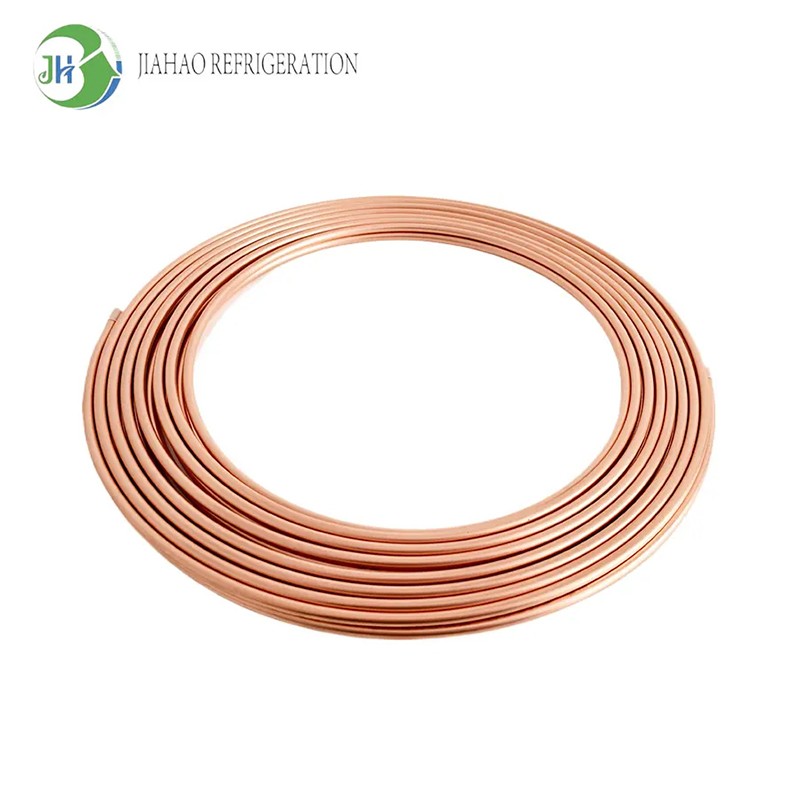
Copper condenser coils feature superior engineering characteristics that make them ideal for demanding HVAC applications. Manufacturers produce these coils using high-grade copper tubing with precise wall thickness tolerances. Research indicates that copper's high thermal conductivity enables efficient heat transfer in heat exchanger applications, making it particularly valuable for HVAC systems. The material's crystalline structure provides excellent thermal and electrical conductivity properties.
AC condenser copper coils typically utilize seamless copper tubing ranging from 1/4" to 7/8" in diameter. The construction process involves specialized bending equipment that maintains tube integrity while creating complex coil geometries. Copper coil of ac systems incorporate various tube configurations, including single-row, multi-row, and serpentine patterns.
| Property | Copper Specifications |
Thermal Conductivity | 400 W/m·K |
Density | 8.96 g/cm³ |
Wall Thickness Range | 0.037" to 0.051" |
Standard Tube Sizes | 1/4" to 7/8" OD |
Working Pressure | Up to 600 PSI |
Performance Characteristics
Copper condenser coils demonstrate exceptional heat transfer capabilities due to their high thermal conductivity. This property enables efficient refrigerant heat rejection, resulting in improved system COP (Coefficient of Performance) and reduced energy consumption. The material's natural antimicrobial properties inhibit bacterial growth within the coil structure.
Corrosion resistance represents another key advantage of ac condenser copper coils. Studies demonstrate that copper and copper alloys have natural resistance to corrosion through protective film formation, ensuring long-term reliability. Copper coil of ac systems maintain structural integrity even when exposed to harsh environmental conditions including salt air, industrial pollutants, and temperature extremes.
Applications and Benefits
HVAC professionals specify copper condenser coils for premium residential and commercial applications. These coils excel in coastal environments where salt corrosion poses significant challenges to other materials. AC condenser copper coils provide reliable performance in industrial settings with aggressive chemical exposure.
The superior thermal performance of copper coil of ac systems translates directly into energy savings. Lower refrigerant discharge temperatures reduce compressor workload, extending equipment life and minimizing maintenance requirements. System designers often specify copper coils for high-efficiency heat pumps and commercial chillers where performance optimization is critical.

Aluminum Tube Coil Overview
Material Structure and Design
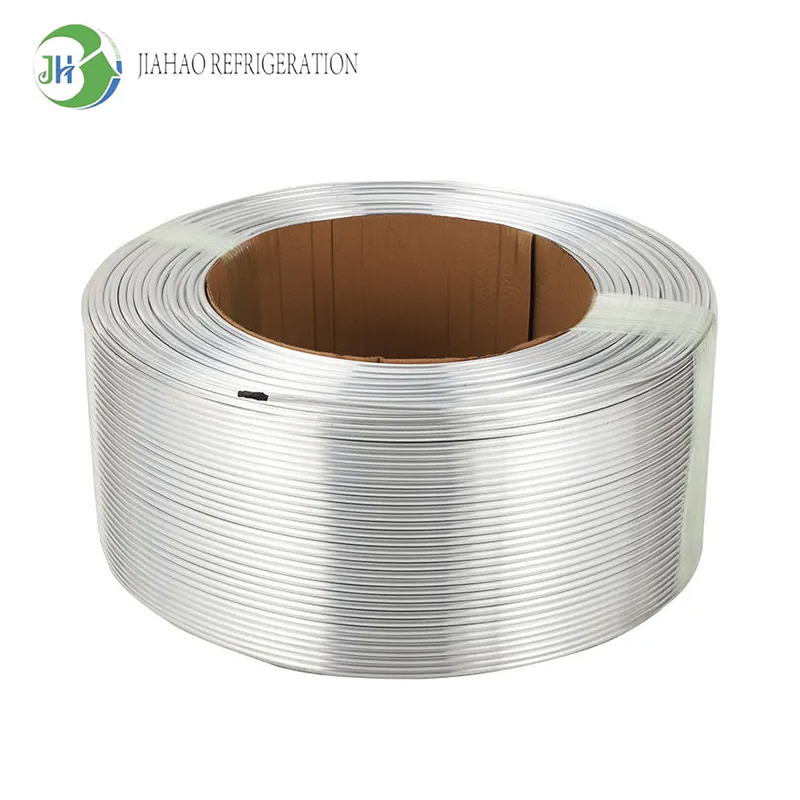
Aluminum tube coils utilize lightweight aluminum alloy construction optimized for HVAC applications. Manufacturers produce these coils using seamless aluminum tubing with controlled wall thickness and diameter tolerances. Air conditioner aluminum coils feature enhanced surface treatments that improve heat transfer characteristics while maintaining corrosion resistance.
The production process for ac aluminium coils involves precision tube bending and joining techniques. Advanced manufacturing methods ensure uniform tube spacing and optimal refrigerant flow distribution. Quality control measures include pressure testing and dimensional verification to meet industry standards.
| Specification | Aluminum Details |
Thermal Conductivity | 205 W/m·K |
Density | 2.70 g/cm³ |
Standard Sizes | 1/8" to 5/8" OD |
Wall Thickness | 0.025" to 0.035" |
Working Pressure | Up to 400 PSI |
Key Features and Advantages
Aluminum tube coils offer significant weight reduction compared to copper alternatives. This characteristic simplifies installation procedures and reduces structural support requirements. Air conditioner aluminum coils provide adequate thermal performance for standard residential and light commercial applications.
Cost efficiency represents the primary advantage of ac aluminium coils. Raw material costs remain significantly lower than copper, enabling budget-conscious system designs. The material's natural oxide layer provides moderate corrosion protection in controlled environments.
Manufacturing flexibility allows aluminum tube coils to be formed into complex geometries with tight bend radii. This capability enables compact coil designs suitable for space-constrained installations.
Suitable Applications
Air conditioner aluminum coils perform well in dry, indoor environments with minimal corrosive exposure. Residential split systems and small commercial units frequently utilize aluminum coil construction. AC aluminium coils suit applications where initial cost considerations outweigh long-term performance requirements.
System designers specify aluminum coils for replacement applications in existing equipment designed for copper coils, provided proper compatibility measures are implemented. Proper installation techniques prevent galvanic corrosion between dissimilar metals.

Performance Comparison Analysis
Thermal Conductivity and Heat Transfer
Copper condenser coils deliver superior heat transfer performance with thermal conductivity nearly twice that of aluminum. This advantage translates into more efficient refrigerant heat rejection and improved system efficiency. AC condenser copper coils enable smaller coil sizes while maintaining equivalent heat transfer capacity.
Aluminum tube coils provide adequate thermal performance for standard applications. While thermal conductivity is lower than copper, proper coil design with increased surface area can compensate for this difference. Air conditioner aluminum coils require larger fin areas to achieve comparable heat transfer rates.
| Performance Metric | Copper | Aluminum |
Heat Transfer Coefficient | Excellent | Good |
Required Surface Area | Standard | 30-40% larger |
Energy Efficiency Impact | Optimal | Acceptable |
Durability and Service Life
Copper coil of ac systems demonstrate exceptional longevity, with typical service lives exceeding 15 years in most environments. The material's inherent corrosion resistance ensures reliable performance throughout the equipment's operational period. AC condenser copper coils maintain structural integrity even after prolonged exposure to harsh operating conditions.
AC aluminium coils provide adequate durability in controlled environments but may experience reduced service life in corrosive conditions. Proper maintenance protocols and environmental protection measures can extend aluminum coil lifespan to 8-12 years.
Regular inspection and maintenance prove critical for both materials. Air conditioner aluminum coils require particular attention to prevent galvanic corrosion when connected to copper components.
Corrosion Resistance Evaluation
Copper's Superior Protection
Copper condenser coils exhibit excellent natural corrosion resistance through the formation of protective surface films. This characteristic enables reliable operation in challenging environments including coastal areas, industrial zones, and regions with aggressive water chemistry. AC condenser copper coils maintain performance integrity even when exposed to salt spray, acid rain, and industrial pollutants.
The electrochemical properties of copper coil of ac systems provide additional protection against galvanic corrosion when properly installed. Copper's position in the galvanic series makes it compatible with most other system components.
Aluminum Corrosion Considerations
Aluminum tube coils demonstrate adequate corrosion resistance in dry, controlled environments. The natural aluminum oxide layer provides basic protection against atmospheric corrosion. However, air conditioner aluminum coils remain susceptible to galvanic corrosion when in direct contact with copper components.
Environmental factors significantly impact aluminum coil longevity. AC aluminium coils perform best in indoor applications with controlled humidity and minimal chemical exposure. Coastal installations require special protective measures and more frequent maintenance intervals.
Proper system design prevents galvanic corrosion by using dielectric unions and compatible joining materials. Installation best practices include avoiding dissimilar metal contact and ensuring proper electrical isolation.
Cost Analysis and Economic Factors
Initial Material Investment
Aluminum tube coils provide substantial initial cost savings, typically 40-60% lower than equivalent copper construction. This advantage makes air conditioner aluminum coils attractive for budget-conscious projects and large-scale installations. AC aluminium coils enable system manufacturers to offer competitive pricing in price-sensitive markets.
Copper condenser coils require higher initial investment due to raw material costs and manufacturing complexity. AC condenser copper coils justify premium pricing through superior performance characteristics and extended service life. Copper coil of ac systems deliver long-term value through energy efficiency improvements and reduced replacement frequency.
Lifecycle Cost Considerations
Total ownership costs include initial purchase price, installation expenses, maintenance requirements, and replacement intervals. Copper coil of ac systems often provide lower lifecycle costs despite higher upfront investment. Energy efficiency benefits and extended service life offset initial cost premiums.
Air conditioner aluminum coils may require more frequent replacement in harsh environments, increasing long-term costs. However, ac aluminium coils remain cost-effective for applications with moderate performance requirements and controlled operating conditions.
| Cost Factor | Copper | Aluminum |
Initial Cost | Higher | Lower |
Installation | Standard | Easier (lighter) |
Energy Efficiency | Superior | Adequate |
Maintenance | Lower | Higher |
Replacement Frequency | 15+ years | 8-12 years |
Installation and Maintenance Requirements
Installation Best Practices
Copper condenser coils require standard installation procedures with attention to proper brazing techniques and refrigerant handling. AC condenser copper coils accommodate various joining methods including flare fittings, compression fittings, and brazed connections. Professional installation ensures optimal performance and system longevity.
Aluminum tube coils demand specialized installation considerations to prevent galvanic corrosion. Air conditioner aluminum coils require compatible joining materials and proper electrical isolation. AC aluminium coils benefit from lighter weight during installation but need careful handling to prevent damage.
Proper system commissioning includes pressure testing, leak detection, and performance verification. Both copper and aluminum coils require thorough cleaning before startup to remove manufacturing residues and installation debris.
Maintenance Protocols
Regular maintenance extends coil life and maintains system efficiency. Copper coil of ac systems require periodic cleaning to remove dirt, debris, and biological growth. AC condenser copper coils tolerate aggressive cleaning methods including pressure washing and chemical coil cleaners.
AC aluminium coils need gentler cleaning procedures to prevent surface damage. Air conditioner aluminum coils benefit from regular fin straightening and protective coating application. Maintenance intervals may require adjustment based on environmental conditions and system loading.
Professional maintenance includes refrigerant level monitoring, electrical connection inspection, and performance testing. Both materials benefit from proactive maintenance programs that identify issues before failure occurs.
Material Compatibility and System Integration
Copper-Aluminum Hybrid Solutions
Modern HVAC systems sometimes incorporate copper aluminum coil construction that combines the benefits of both materials. These hybrid designs typically utilize copper tubing for refrigerant transport with aluminum fins for heat exchange surface area. This approach balances performance, cost, and manufacturing efficiency.
Copper aluminum coil systems require careful design to prevent galvanic corrosion between dissimilar metals. Proper manufacturing techniques include barrier coatings, compatible joining materials, and electrical isolation methods. Quality control measures ensure long-term reliability of hybrid constructions.
The combination approach enables system optimization for specific applications. Copper aluminum coil designs can provide enhanced performance compared to all-aluminum construction while maintaining cost advantages over all-copper systems.

Selection Guidelines and Decision Criteria
Application-Based Selection
System designers should evaluate operating conditions, performance requirements, and budget constraints when selecting coil materials. Copper condenser coils suit demanding applications including coastal installations, industrial environments, and high-efficiency systems. AC condenser copper coils provide optimal choice for premium residential and critical commercial applications.
Aluminum tube coils work well for standard residential systems in controlled environments. Air conditioner aluminum coils offer appropriate solutions for budget-conscious projects with moderate performance requirements. AC aluminium coils suit replacement applications in existing aluminum-based systems.
Environmental factors heavily influence material selection. Harsh conditions favor copper coil of ac systems despite higher initial costs. Controlled indoor environments may accommodate aluminum construction with appropriate maintenance protocols.
Performance Priority Matrix
| Priority Factor | Copper Recommendation | Aluminum Recommendation |
Maximum Efficiency | Strongly Preferred | Acceptable |
Corrosion Resistance | Strongly Preferred | Limited Conditions |
Initial Cost Savings | Not Recommended | Strongly Preferred |
Lightweight Installation | Acceptable | Strongly Preferred |
Long Service Life | Strongly Preferred | Acceptable |
Harsh Environment | Required | Not Recommended |
Conclusion
The choice between copper condenser coils and aluminum tube coils depends on specific application requirements, environmental conditions, and economic considerations. AC condenser copper coils provide superior thermal performance, corrosion resistance, and service life, making them ideal for demanding installations and harsh environments. Copper coil of ac systems deliver optimal energy efficiency and long-term reliability despite higher initial investment.
Air conditioner aluminum coils offer significant cost advantages and lightweight installation benefits for standard residential applications in controlled environments. AC aluminium coils provide adequate performance when properly designed, installed, and maintained. The emerging copper aluminum coil hybrid approach combines benefits of both materials for specific applications.
System designers, contractors, and facility managers must evaluate total lifecycle costs, performance requirements, and environmental factors when making material selections. Proper installation techniques, regular maintenance, and quality system design ensure optimal performance regardless of coil material choice.
For projects requiring reliable, high-performance condenser coils, consulting with experienced air conditioner coil manufacturers like JIAHAO ensures optimal material selection and system design. Their expertise in copper, aluminum, and hybrid coil technologies provides valuable guidance for achieving project success and long-term customer satisfaction.
Frequently Asked Questions
What is the main difference between copper condenser coils and aluminum tube coils?
Copper condenser coils offer superior thermal conductivity (400 W/m·K) compared to aluminum tube coils (205 W/m·K), resulting in more efficient heat transfer. AC condenser copper coils also provide better corrosion resistance and longer service life, while air conditioner aluminum coils are lighter and more cost-effective for standard applications.
Which material lasts longer in HVAC systems?
Copper coil of ac systems typically last 10-15+ years even in harsh conditions, while ac aluminium coils generally provide 8-12 years of service life in controlled environments. AC condenser copper coils maintain performance integrity longer due to superior corrosion resistance.
Are aluminum condenser coils suitable for coastal installations?
Air conditioner aluminum coils require special protective coatings and more frequent maintenance in coastal areas due to salt air corrosion. Copper condenser coils naturally resist salt corrosion and are preferred for marine environments without additional protection.
Can I replace copper coils with aluminum coils in existing systems?
Replacing copper condenser coils with aluminum tube coils requires careful consideration of galvanic corrosion prevention. Professional installation with proper dielectric unions and compatible joining materials is essential when mixing ac aluminium coils with copper components.
Why are copper coils more expensive than aluminum?
AC condenser copper coils cost more due to higher raw material prices and manufacturing complexity. However, copper coil of ac systems often provide better long-term value through energy efficiency improvements, extended service life, and reduced maintenance requirements.
Do aluminum coils require more maintenance than copper?
AC aluminium coils typically need gentler cleaning procedures and more frequent inspections, especially in corrosive environments. Air conditioner aluminum coils benefit from protective coatings and regular fin straightening to maintain optimal performance.
Which coil material is better for energy efficiency?
Copper condenser coils deliver superior energy efficiency due to higher thermal conductivity, resulting in lower operating costs and improved system COP. AC condenser copper coils enable more compact designs while maintaining equivalent cooling capacity.
Can copper and aluminum be combined in the same coil?
Copper aluminum coils utilize hybrid construction with copper tubes and aluminum fins, combining thermal efficiency with cost optimization. Proper manufacturing techniques prevent galvanic corrosion in these hybrid designs.