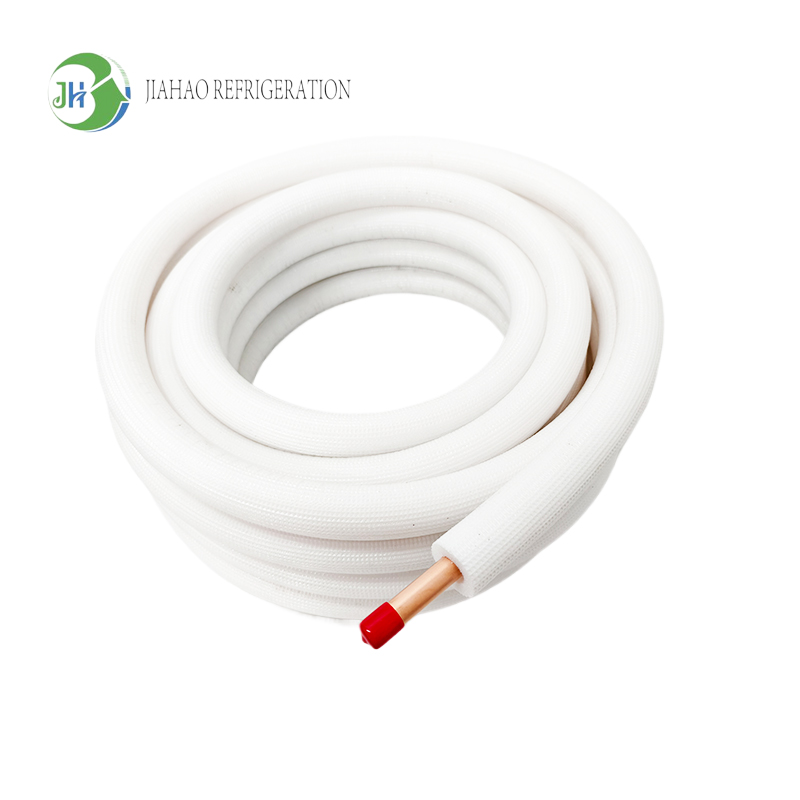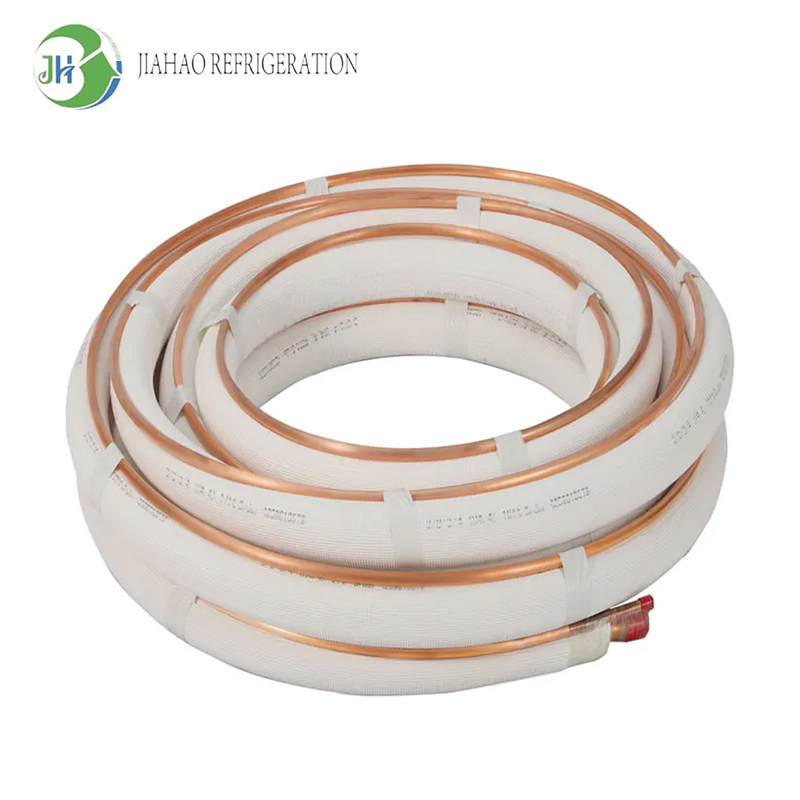
What Size Copper Pipe for Air Conditioner: Complete 2026 Professional Guide
 Sep 14, 2026|
 View:225
Choosing the right copper pipe size for an air conditioner is the difference between a system that cools efficiently for two decades and one that fails early under compressor stress. This 2026 edition of our sizing guide updates the standard charts for today’s refrigerants — including the R-32 and R-454B equipment now replacing R-410A in new installations — and gives HVAC installers, wholesalers and homeowners the exact suction-line and liquid-line diameters they need, the rules for long line sets, and the material standards that guarantee pressure safety. Jiahao manufactures the ASTM B280 copper line sets described here, so the numbers below reflect both published OEM tables and our production-floor QC experience.
Key Takeaways
Standard residential splits use copper line sets from 1/4" to 7/8" OD; the suction line is always one to two sizes larger than the liquid line.
Match the size to system capacity (BTU/ton), line length, refrigerant type and elevation — there is no one-size-fits-all answer.
Undersized lines can cut system efficiency by 20–30% and shorten compressor life.
R-32 and R-454B units (the 2026 mainstream) usually keep the same nominal sizes as R-410A — always follow the OEM piping table on the unit.
Type L copper meeting ASTM B280 is the required grade for R-410A-class pressures (700+ PSI rated).
Insulate the suction line with minimum 1/2" closed-cell foam and seal every seam.
In This Guide
Air Conditioner Copper Pipe Size Chart by Capacity
The air conditioner copper pipe size correlates directly with cooling capacity, measured in tons or BTU/hr. Manufacturers size each line for the refrigerant flow the compressor needs, and larger-capacity units need bigger diameters to avoid excessive pressure drop. Use this chart for standard split systems:
| System Capacity | Suction Line OD | Liquid Line OD | Typical Applications |
|---|---|---|---|
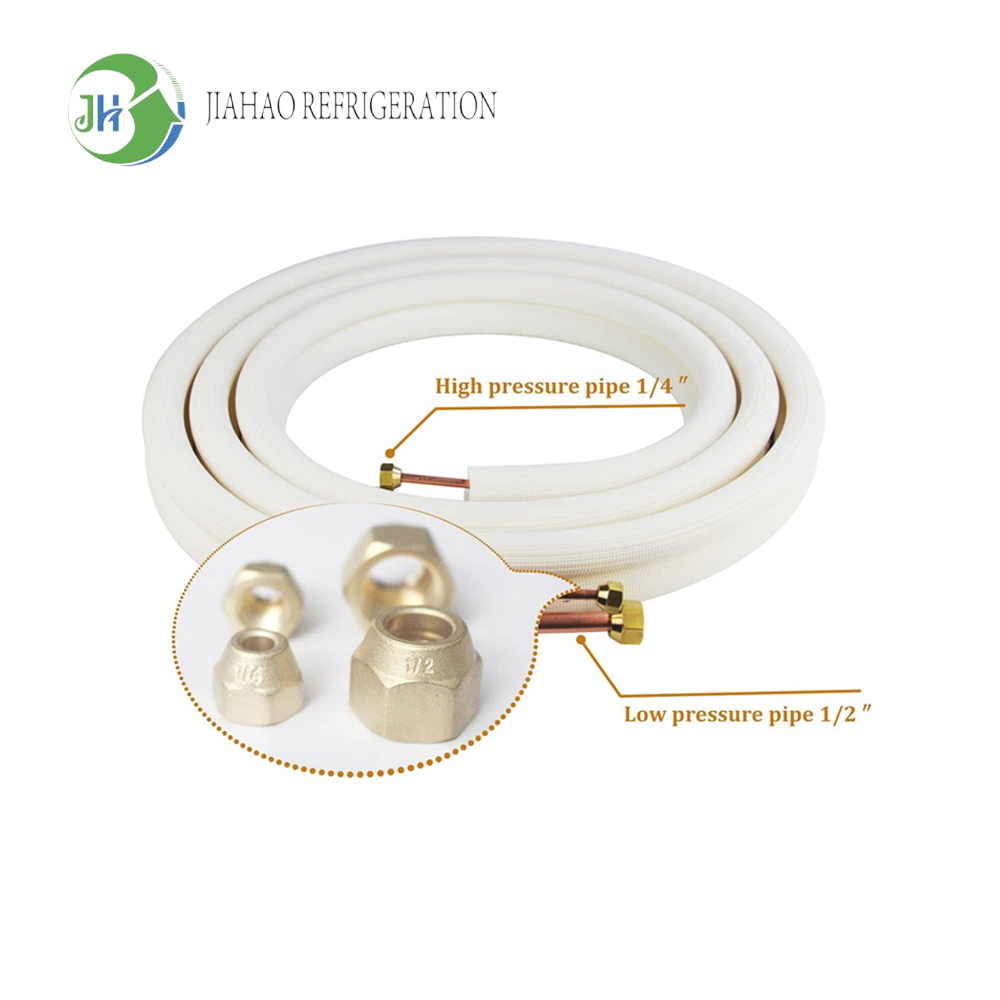
| 1.5–2 Tons (18,000–24,000 BTU) | 3/8" (9.53 mm) | 1/4" (6.35 mm) | Small apartments, single rooms |
| 2–2.5 Tons (24,000–30,000 BTU) | 1/2" (12.7 mm) | 3/8" (9.53 mm) | Standard residential homes |
| 3–4 Tons (36,000–48,000 BTU) | 5/8" (15.88 mm) | 3/8" (9.53 mm) | Large homes, multi-zone systems |
| 4–5 Tons (48,000–60,000 BTU) | 3/4" (19.05 mm) | 1/2" (12.7 mm) | Commercial spaces, large residences |
| 5+ Tons (60,000+ BTU) | 7/8" (22.22 mm) | 5/8" (15.88 mm) | Commercial buildings, large facilities |
Assumes R-410A or R-32 split systems, line sets up to 50 ft and standard elevation. Always cross-check the nameplate and the installation manual supplied with the unit.
Suction Line vs Liquid Line: Why Two Sizes?
Every split system uses two refrigerant lines between the indoor evaporator and the outdoor condensing unit. The suction line carries low-pressure refrigerant vapor back to the compressor and must be larger to keep gas velocity in the range that returns oil to the compressor. The liquid line carries high-pressure liquid to the expansion device and can be smaller because liquid takes up less volume. Sizing each line separately protects refrigerant velocity, limits pressure drop and ensures oil return.
Copper remains the industry standard for these lines because of its thermal conductivity, corrosion resistance and ability to handle the operating pressures of modern refrigerants — R-410A-class systems work at ratings above 700 PSI. According to technical documentation from the Copper Development Association[1], properly specified and installed copper tubing maintains structural integrity and efficiency for 20+ years when matched to system requirements.
Six Factors That Change the Pipe Size You Need
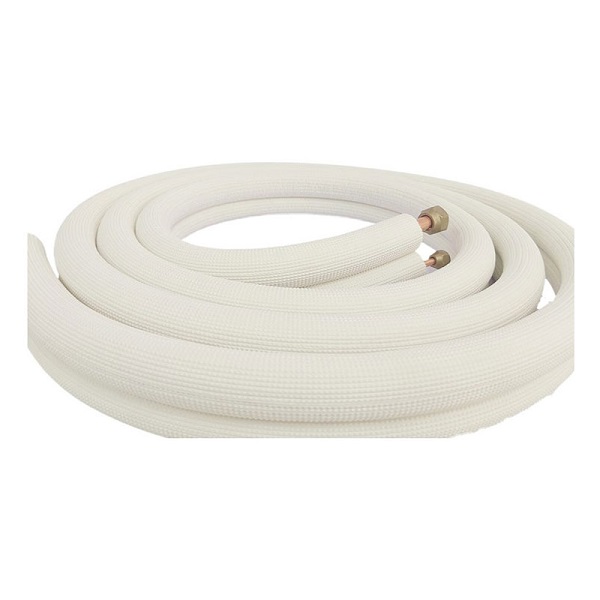
Four variables matter most when selecting air conditioner copper pipe size — and each can shift the chart above by a full nominal size.
1. System Capacity (BTU and Tons)
Capacity determines the refrigerant mass flow the pipes must carry. Higher flow needs larger diameters to keep velocity and pressure drop within design limits — this is why a 2-ton mini split runs 3/8" suction while a 5-ton commercial unit needs 7/8".
2. Refrigerant Type: R-410A vs R-32 in 2026
This is the biggest change since the original guide was published. New residential and light-commercial split systems sold in North America and the EU have largely moved to R-32 (and R-454B in some markets), replacing R-410A under refrigerant phasedown rules. The good news for installers: OEM piping tables give identical nominal diameters for equivalent-capacity R-32 and R-410A units in most cases, and some manufacturers even allow a one-size-smaller suction line because R-32 has higher volumetric capacity. R-32 works at roughly 1.6 times the pressure of legacy R-22, so pipe grade and cleanliness matter just as much as diameter.
| Refrigerant | Status in New Equipment (2026) | Line Sizing Guidance |
|---|---|---|
| R-410A | Phased out of many new residential units; still common in existing systems | Use the standard chart above — the reference sizing for this guide |
| R-32 | Mainstream in new splits worldwide | Same nominal sizes for equivalent capacity in most OEM tables; some allow one size smaller suction — check the manual |
| R-454B | Used in some North American new equipment | Follow the OEM piping table; do not assume R-410A sizes |
Line diameters are set by the equipment manufacturer. When retrofitting an existing line set to a new R-32 unit, verify the piping table (see OEM R-410A/R-32 piping compatibility tables[5]) and confirm cleanliness before reuse.
3. Line Length and Vertical Rise
Manufacturer specifications assume line lengths of about 50 ft with minimal elevation difference. Industry guidelines established by ASHRAE[2] recommend limiting suction-line pressure drop to roughly 2°F equivalent saturation temperature change, while liquid lines must avoid refrigerant flashing before the expansion device. Long runs and tall risers therefore push you to the next size up — see the dedicated section below.
4. Ambient Conditions and Routing
Extreme ambient temperatures change refrigerant density and flow, and long routing through hot attics or unconditioned spaces adds heat gain. If part of the line set passes through an unconditioned area, keep the insulation intact along the full run and check the manufacturer’s notes for derating on long or exposed runs.
Line Sets Over 50 Feet: When to Upsize
Anything beyond the standard 50 ft one-way run adds pressure drop that the chart above does not cover. The practical rule used by HVAC contractors: upsize the suction line by one nominal size for every additional 25 ft of length, and review the liquid line when the run is extreme.
| One-Way Line Set Length | Suction Line Adjustment | Installation Notes |
|---|---|---|
| Up to 50 ft | Standard size (chart above) | Most factory pre-charged kits |
| 51–75 ft | Upsize one nominal size | Confirm oil return on vertical risers; add traps every 15–20 ft of rise |
| 76–100 ft | Upsize two sizes and consult the OEM | Check capacity loss, add refrigerant per OEM add-on tables |
| Over 100 ft | Engineering review required | Pressure-drop calculation and often a larger unit or VRF piping rules |
Vertical risers above 10–15 ft may also require upsizing to keep minimum refrigerant velocity near 1,500 ft/min so oil returns to the compressor. Every elbow, tee and fitting adds pressure drop equivalent to several feet of straight pipe.
Common Sizing Mistakes and Their Real Cost
Improper pipe sizing is one of the most frequent installation defects in air conditioning, and it shows up on the electric bill long before the service call:
Undersized suction lines: create excessive pressure drop, force the compressor to work harder, raise power consumption by 20–30%, generate heat that degrades lubricant and accelerate wear. Expect reduced cooling capacity, frequent cycling and shortened compressor life.
Oversized liquid lines: can let refrigerant temperature drop below saturation, causing premature vaporization before the expansion device. This cuts capacity, creates unstable operation and increases the required refrigerant charge.
Disregarding manufacturer specifications: deviating from published tables compromises performance and voids warranty coverage. Installation manuals carry the sizing table for the specific model — use it.
Neglecting line-length adjustments: using standard sizes on extended runs creates the same problems as undersizing. Add up elbows and fittings as equivalent pipe length before deciding the size.
Copper Tube Standards: ASTM B280, Type L and Wall Thickness
HVAC refrigerant tubing must meet strict material and dimensional standards. Type L copper conforming to ASTM B280[3] is the industry standard for air-conditioning and refrigeration (ACR) service. B280 tube contains minimum 99.9% copper (C12200 alloy) with controlled phosphorus content for deoxidation, and it arrives nitrogen-purged and sealed to prevent internal oxidation and moisture ingress. Nominal Type L wall thickness for common ACR sizes runs from about 0.030" (1/4" OD) to 0.045" (7/8" OD), which is what carries the 700+ PSI ratings modern systems require.
| Specification | Requirement | Purpose / Benefit |
|---|---|---|
| Material Standard | ASTM B280 Type L Copper | Ensures proper wall thickness and pressure rating |
| Copper Purity | Minimum 99.9% (C12200 alloy) | Maximizes thermal conductivity and corrosion resistance |
| Pressure Rating | 700+ PSI working pressure | Safely contains R-410A-class operating pressures |
| Interior Condition | Clean, oxide-free, nitrogen sealed | Prevents contamination and moisture ingress |
| Suction Line Insulation | Min. 1/2" closed-cell elastomeric | Prevents condensation and heat gain |
If a supplier cannot confirm ASTM B280 certification, C12200 alloy and nitrogen-sealed ends on the spec sheet, treat the material as unsuitable for refrigerant service. Jiahao’s copper line sets and copper fittings are produced and QC-tested against these requirements.
Professional Installation Best Practices
Insulation Requirements and Application Methods
Suction-line insulation prevents condensation on cold copper, limits heat gain and protects efficiency. Industry standards require closed-cell elastomeric foam with minimum 1/2" wall thickness on the full suction-line run, with all longitudinal seams sealed using manufacturer-approved adhesive. According to U.S. Department of Energy[4] research, properly insulated refrigerant lines can improve system efficiency by 5–10% while preventing moisture damage to building structures.
Brazing Techniques and Joint Quality
Professional connections use silver-bearing brazing alloys at temperatures above 840°F, creating metallurgical bonds far stronger than soldered joints. Flow dry nitrogen through the pipes while heating to prevent internal oxidation, then visually inspect and pressure-test every joint before charging the system.
Line Routing, Support and Protection
Support refrigerant lines every 4–6 ft to prevent sagging and oil trapping, and pitch them about 1/2" per 10 ft toward the outdoor unit to help oil drain back. Keep a minimum bend radius of about 5 times the pipe OD to avoid kinking and flow restriction, and protect lines from mechanical damage where they pass through walls and floors.
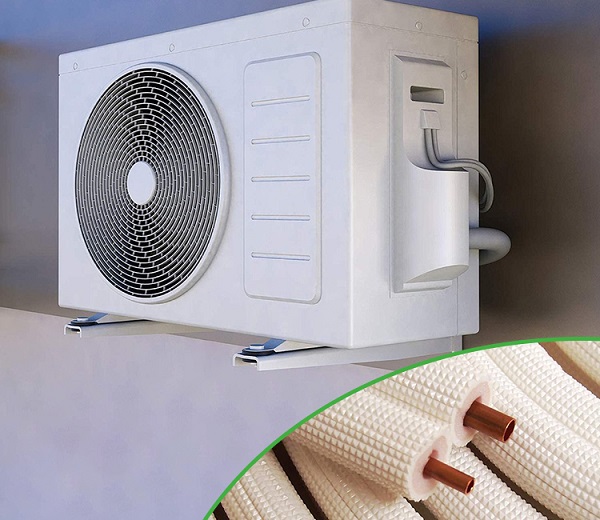
Need OEM-Grade Copper Pipe for Your AC Projects?
Jiahao is a professional HVAC copper pipe manufacturer supplying ASTM B280-compliant line sets, connection pipes and fittings to brands, wholesalers and installers worldwide. Free sizing advice, factory-direct wholesale pricing, sample support and full QC documentation on request.
Cost, Efficiency and Long-Term Value
Correct sizing balances initial material cost against efficiency and equipment life. Larger diameters cost a little more upfront, but they prevent the efficiency losses that inflate operating costs for the life of the system — a correctly sized installation typically recovers the extra material cost through energy savings within 2–3 years. Over a typical 15–20 year lifespan, an undersized line set that cuts efficiency by 20% can add several hundred dollars to annual energy bills, making the modest cost of the correct material the cheapest insurance available.
Maintenance and Performance Monitoring
Annual professional inspections should verify insulation integrity, check for refrigerant leaks at brazed connections and confirm mechanical supports are secure. Superheat and subcooling measurements reveal whether refrigerant flow still matches design parameters, and catching even a small leak early prevents gradual charge loss that reduces efficiency and risks compressor damage over time.
Advanced Installations: Multi-Zone, VRF and Heat Pumps
Multi-Zone and Variable Refrigerant Flow Systems
Multi-zone and VRF systems size the main line for total system capacity while branch lines follow individual zone requirements. Manufacturers publish engineering guidelines specific to each multi-zone family — follow them exactly for performance and warranty compliance.
Heat Pump and Low-Ambient Applications
Heat pumps reverse refrigerant flow between modes: the suction line in cooling becomes the discharge line in heating, experiencing very different pressures and temperatures. Low-ambient operation below about 50°F may need larger suction lines or special oil-return provisions to keep refrigerant velocity adequate at reduced capacity.
Conclusion
The right air conditioner copper pipe size comes down to four things: system capacity, refrigerant type, line length and installation conditions. Start from the capacity chart in this guide, then adjust for R-32/R-454B equipment, long runs and elevation using the OEM manual. Pair the correct diameter with Type L copper per ASTM B280, clean brazing and complete insulation, and the modest extra cost pays back in efficiency and equipment life for 20+ years.
Need help confirming a size for a specific project? Send the unit model and line run to the Jiahao team and we’ll confirm the suction/liquid sizes and provide a factory-direct quotation.
Frequently Asked Questions
What happens if I use the wrong copper pipe size for my air conditioner?
Can I reuse old copper pipes when replacing my air conditioner?
Do both refrigerant lines need insulation?
How does line length affect copper pipe sizing?
What is the difference between Type L and Type M copper tubing?
How long do properly sized copper pipes last in AC systems?
Can R-32 air conditioners use the same copper pipe sizes as R-410A?
Copper Development Association — HVAC&R Copper Tubing Applications: copper.org
ASHRAE Handbook – Refrigeration (ASHRAE, Atlanta): ashrae.org
ASTM B280 – Standard Specification for Seamless Copper Tube for Air Conditioning and Refrigeration Field Service: astm.org
U.S. Department of Energy — Heat Pump Systems Energy Saver Guide: energy.gov
Toshiba Air Conditioning — Replacement Technology Piping Specification (R-410A/R-32 piping tables): toshiba-aircon.co.uk